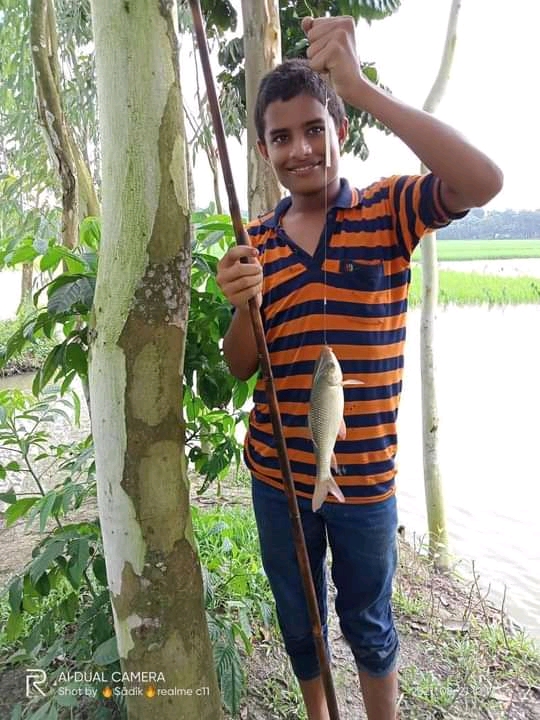
Catch-and-release is a standard practice in Canadian freshwater fishing — required by regulation in many catch-and-release-only sections, and voluntarily adopted by a large portion of sport anglers on waters where keeping fish is permitted. The practice is generally well-intentioned, but the details of how a fish is handled between hook-up and release have a significant effect on whether that fish survives the encounter.
Research on post-release mortality — the rate at which fish die after being released — shows considerable variation. Studies on walleye in Ontario tournament fisheries have documented immediate post-release mortality rates between 1% and 12%, with delayed mortality (fish that survive the day but die within a week) adding further losses. The difference between the lower and higher ends of that range is largely attributable to factors the angler controls directly: fight time, water temperature, air exposure, and handling method.
Fight Time: The Most Underappreciated Variable
The longer a fish fights, the more it exhausts its lactic acid buffer system. Unlike humans, who metabolize lactic acid relatively quickly, fish require significant recovery time — sometimes hours — to clear the lactate from their muscles after an extended fight. A fish that is completely exhausted when brought to the net may appear to revive when released, swim away, and then die hours later in deeper water, out of sight.
The practical implication: use tackle that is appropriately matched to the fish. Fishing for northern pike on 8 lb test line because it provides a more "sporting" fight extends the fight duration by a factor of 3 to 5 compared to properly matched 20 lb braid on a medium-heavy rod. On a hot July day when water temperatures are above 22°C — already stressful for many species — that extended fight becomes a significant mortality risk.
A reasonable target for most Canadian freshwater species:
- Walleye under 60 cm: 2–4 minutes maximum fight time
- Walleye over 60 cm / trophy fish: 3–6 minutes, minimize air exposure
- Northern pike: 3–8 minutes depending on size; pike are resilient but suffer in warm water
- Largemouth and smallmouth bass: 1–3 minutes; bass are relatively hardy and recover quickly in cooler water
- Brook trout: 1–2 minutes; among the most temperature-sensitive of Ontario's common freshwater species
Water Temperature and the Stress Threshold
Water temperature is the single most important contextual variable for catch-and-release survival. As water temperature rises, dissolved oxygen decreases and fish metabolism increases, meaning the fish is already under greater physiological stress before it is even hooked.
Species-specific stress thresholds that inform release decisions:
- Brook trout: Significant stress above 18°C; consider not fishing for them when ambient stream temperature exceeds this level
- Brown trout: Stress increases above 20°C; many regulated trout streams in Alberta post voluntary no-fishing advisories above 22°C
- Walleye: More tolerant of warm water than salmonids, but post-release mortality increases meaningfully above 23°C surface temperature
- Northern pike: Prefer cooler water; stress accelerates above 22°C; summer pike fishing during heat events increases delayed mortality risk
The Trout Unlimited Canada chapter network maintains voluntary stream temperature monitoring on several Alberta and BC rivers and publishes temperature advisories during heat events. These are worth monitoring if you fish these waters in summer.
Barbless Hooks: What the Data Shows
Regulations in many Canadian catch-and-release-only rivers require barbless hooks. The evidence for their benefit is consistent: barbless hooks reduce hook removal time, reduce tissue damage, and allow hooks to fall free with minimal handling in some cases. Studies conducted on Pacific salmon in British Columbia and on stream trout in Ontario consistently show reduced injury rates with barbless compared to standard barbed hooks under equivalent conditions.
Barbless hooks do not inherently reduce hookup rates when properly used. The perception that fish escape more easily on barbless hooks typically reflects hook-set technique — specifically, not maintaining tension through the fight. With consistent tension and a matched rod, barbless hook retention is comparable to barbed in most freshwater scenarios.
Crimping a barb on an existing hook with needle-nose pliers is a reliable method when pre-made barbless lures are unavailable. The compressed barb does not affect hook geometry significantly and reduces removal time to seconds.
For lake trout in Ontario's clear shield lakes, a hook that is set in the corner of the jaw — rather than deeper in the throat — significantly improves survival odds. Slow presentations that allow fish to fully commit before the hook-set reduce deep hooking rates. This is particularly relevant for ice fishing, where the fish's approach angle often results in a deeper take than open-water fishing.
Handling: What Damages Fish and What Doesn't
Wet Your Hands
The slime coat on a freshwater fish is its primary barrier against bacteria and fungal infection. Dry hands remove significantly more slime than wet hands during a grip of the same duration. Wetting hands before contact is the simplest action an angler can take to reduce slime coat damage — it takes two seconds and requires no gear.
Air Exposure Time
There is a consistent rule in tournament bass fishing applied to catch-and-release across all species: for every second a fish is out of the water, it needs at minimum that much time in the water to recover. More conservative guidelines suggest a 1:3 ratio — one second out of water requires three seconds of in-water recovery.
Practically: keep air exposure under 30 seconds for most species. For photographs, keep the fish near the water surface, take the photo, and return the fish. The image-to-mortality tradeoff is real, and a photograph that takes 90 seconds of air exposure increases delayed mortality odds substantially compared to a 15-second photo.
Grip and Support
Large fish — pike in the 80 cm range, or largemouth bass — should not be held vertically by the jaw without supporting the body. Vertical holding of a large fish by its jaw can dislocate the lower jaw and damage internal organs, particularly in species with a heavier body mass. Supporting the body with the second hand reduces this risk.
For pike and muskellunge specifically, the vertical jaw hold is widely discouraged in Ontario fisheries management guidelines. The recommended hold cradles the belly with the forearm while the tail is gently supported — reducing jaw stress while keeping the fish in a natural orientation.
Landing Nets
Rubber mesh nets cause substantially less fin and scale damage than nylon or knotted nylon nets. The abrasive quality of nylon mesh removes scales and slime coat on contact. Rubber mesh retains slime coating and reduces fin tears. For anglers who release most of their catch, the investment in a rubber mesh landing net is worth it.
Reviving a Fish Before Release
A fish that does not swim away strongly when released should not simply be dropped in the water. Hold the fish in a natural horizontal orientation, submerged, facing into any current. Allow water to flow through the gills naturally. Do not force the fish forward and backward — this does not assist respiration and may actually reduce oxygen intake compared to still holding.
If the fish rolls belly-up when released, retrieve it and hold it submerged again. On a still day with no current, gently moving the fish in a figure-eight pattern at low speed can increase water flow over the gills. Most fish that are properly revived will hold steady, then kick away within 30 to 90 seconds. If a fish fails to revive after several minutes, it may not survive — which is worth factoring into future decisions about targeting that species under similar temperature conditions.
Regulations That Reference Catch-and-Release
Several provincial regulations in Canada now include specific provisions tied to catch-and-release fishing — including mandatory barbless requirements in designated areas, restrictions on removing certain species from the water for photography, and slot-size limits that effectively require releasing fish outside a certain size range. The most current information is maintained by provincial fisheries management bodies: